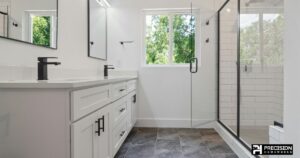
The best easy-clean shower tile options for bathroom remodeling are porcelain tile, ceramic tile, large-format tile, and other low-maintenance surfaces that resist moisture, stains, and buildup. The right shower tile helps create a beautiful bathroom while reducing cleaning time and long-term maintenance.
A shower is one of the most frequently used areas in a bathroom, which means tile selection plays an important role in both appearance and performance. Homeowners should consider factors such as water resistance, durability, grout maintenance, slip resistance, and overall design before choosing shower materials.
Modern bathroom remodeling projects often focus on creating clean, functional spaces that combine attractive designs with practical maintenance.
Why Shower Tile Selection Matters in Bathroom Remodeling
Shower tile does more than improve the appearance of a bathroom. It protects walls from constant moisture exposure and creates a durable surface that can handle daily use.
The right shower tile should provide:
- Moisture resistance
- Easy cleaning
- Long-term durability
- Safe surface texture
- Compatibility with bathroom design
Poor tile selection can lead to increased maintenance, grout discoloration, and difficulty keeping the shower area clean.
For this reason, many homeowners choose materials designed specifically for wet environments.
Porcelain Tile: A Popular Low-Maintenance Shower Option
Porcelain tile is one of the most popular choices for modern shower remodeling projects because of its durability and water resistance.
Porcelain is made from refined clay and fired at high temperatures, creating a dense material with low water absorption.
Benefits of porcelain shower tile include:
- Highly durable surface
- Resistant to moisture
- Easy maintenance
- Available in many designs
- Suitable for shower walls and floors
Porcelain tiles are available in styles that replicate natural materials such as marble, stone, and wood. This allows homeowners to achieve a luxury appearance without the maintenance requirements of some natural materials.
Large-format porcelain tiles are especially popular because they reduce the number of grout lines, making cleaning easier.
Ceramic Tile for Affordable Bathroom Renovations
Ceramic tile is another common choice for shower walls because it offers versatility and affordability.
Ceramic tiles are available in many:
- Colors
- Shapes
- Patterns
- Finishes
- Sizes
They are often used for shower walls because they provide a decorative surface while remaining relatively easy to maintain.
Modern ceramic tiles can create designs ranging from traditional bathrooms to contemporary spaces.
When properly installed with suitable waterproofing systems, ceramic shower tiles can provide long-lasting performance.
Large-Format Shower Tiles Reduce Cleaning Requirements
Large-format tiles have become increasingly popular in bathroom remodeling because they create a cleaner visual appearance and require less grout maintenance.
Traditional small tiles contain more grout lines, which can collect:
- Soap residue
- Dirt
- Moisture buildup
Large tiles reduce the amount of grout required across the shower surface.
Benefits include:
- Easier cleaning
- Modern appearance
- Fewer maintenance areas
- More spacious visual effect
Large-format porcelain tiles are commonly used in luxury bathroom designs because they create a seamless and elegant appearance.
Glass Tile for Modern Shower Designs
Glass tile is often selected as an accent material in contemporary bathroom remodeling projects.
It can be used for:
- Shower niches
- Accent walls
- Decorative borders
- Feature sections
Glass tile reflects light and can make smaller bathrooms appear brighter.
However, glass tile requires proper installation because uneven surfaces or incorrect installation methods can affect durability.
For homeowners who want a modern design feature, glass tile can add visual interest without covering the entire shower area.
Natural Stone Tile Options for Luxury Bathrooms
Natural stone tiles such as marble, granite, and travertine can create a premium bathroom appearance.
Popular natural stone shower materials include:
- Marble tile
- Granite tile
- Travertine tile
- Slate tile
Natural stone provides unique patterns and textures because each piece has natural variations.
However, natural stone usually requires more maintenance than porcelain or ceramic tile. Many stone materials need sealing to protect against moisture and staining.
Homeowners considering natural stone should understand the maintenance requirements before selecting this option.
Choose Low-Maintenance Grout for Easier Cleaning
Tile is only one part of a shower surface. Grout selection also affects cleaning and maintenance.
Traditional grout can absorb moisture and may require regular cleaning.
Modern options include:
- Epoxy grout
- Stain-resistant grout
- Sealed cement grout
Epoxy grout is often considered easier to maintain because it is less porous and more resistant to stains compared with traditional cement grout.
Choosing the right grout can significantly improve the long-term appearance of a shower.
Matte vs Glossy Shower Tiles: Which Is Better?
The finish of shower tile affects both appearance and maintenance.
Glossy Tile
Advantages:
- Reflects light
- Creates a bright appearance
- Easier to wipe smooth surfaces
Glossy tiles are commonly used on shower walls.
Matte Tile
Advantages:
- Provides a softer appearance
- Shows fewer water marks
- Often preferred for shower floors
The best choice depends on the location and purpose of the tile.
For example, matte finishes are often preferred on floors because they can provide better traction, while glossy tiles are frequently used for decorative walls.
Best Shower Tile Colors for Easy Maintenance
Tile color can influence how clean a shower looks between cleanings.
Popular options include:
Neutral Colors
Examples:
- White
- Gray
- Beige
- Sand tones
These colors create timeless bathroom designs and work well with many styles.
Natural Colors
Stone-inspired colors create a relaxing spa-like environment.
Dark Colors
Dark tiles can create a dramatic appearance but may show water spots and mineral deposits more easily.
Many homeowners choose balanced neutral colors because they provide both style and practicality.
Shower Tile Installation Considerations
Even the best shower tile requires professional installation to perform correctly.
Important installation factors include:
- Proper waterproofing
- Correct tile spacing
- Quality grout application
- Surface preparation
- Proper drainage
A professional bathroom remodeling contractor can ensure that tile installation follows industry standards and protects against moisture problems.
Waterproofing behind shower tile is especially important because tile itself does not completely prevent water penetration.
How to Choose the Right Shower Tile for Your Bathroom
The best shower tile depends on your design goals, maintenance preferences, and budget.
Consider:
Bathroom Size
Large-format tiles can make smaller bathrooms appear more open.
Cleaning Preferences
Porcelain and large tiles typically require less maintenance.
Design Style
Choose materials that match your overall bathroom design.
Budget
Tile costs vary depending on material, size, finish, and installation requirements.
A professional remodeling consultation can help homeowners choose the right combination of style and performance.
Final Thoughts
Choosing the best easy-clean shower tile options is an important step in bathroom remodeling. Porcelain tile, ceramic tile, large-format tiles, and carefully selected grout systems can create a durable and attractive shower space with easier maintenance.
Modern homeowners are prioritizing bathroom designs that combine comfort, functionality, and long-lasting materials.
With proper planning and professional installation, the right shower tile can improve the appearance, performance, and value of a bathroom renovation project.