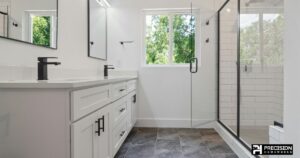
A shower bench may look like a small detail, but it can completely change how a shower feels and functions. It can provide a comfortable place to sit, make daily routines easier, add a useful surface, and give a shower a more finished appearance. For homeowners planning a bathroom remodel in Southeast Michigan, a bench is one feature that can deliver practical value without taking over the design.
The best shower bench is planned around shower size, door location, controls, spray pattern, drainage, waterproofing, and the people who will use the space. Whether you are remodeling in Brighton, Novi, Northville, South Lyon, Milford, or Wixom, it should feel like part of the shower from the beginning.
Why Add a Shower Bench?
A built-in shower bench creates seating, gives you a convenient place to shave or wash, and provides a landing spot for products. In a larger walk-in shower, it can also make an empty wall feel more intentional.
A bench may support long-term usability too. Seating can be helpful for anyone who prefers to shower while seated or simply wants a stable place to pause. A bench alone does not make a shower fully accessible, but it can be one useful part of a broader plan with a low-threshold entry, handheld showerhead, grab-bar blocking, slip-resistant flooring, and reachable controls.
1. Built-In Tiled Shower Benches
A built-in tiled bench is one of the most common choices for a custom shower. It can run from wall to wall or occupy one end of the enclosure. Because it is constructed as part of the shower, it can be tiled to coordinate with the walls and floor.
A solid-surface top can reduce grout joints and make maintenance easier. The bench still needs to be constructed and waterproofed correctly, and the top should direct water toward the shower rather than allowing it to sit against the wall.
These details need to be handled properly during construction.
2. Floating Shower Benches
A floating bench is attached to the wall without a solid base extending to the floor. Visually, this can make a shower feel lighter and more open, especially when floor space is limited.
Floating benches work well in bathrooms with frameless glass and clean tile lines. They can also make floor cleaning easier because there is no bench base touching the shower floor.
The wall needs proper structural support, though. Framing and attachment points need to be planned before the wall is closed.
3. Corner Benches for Smaller Showers
Not every shower has enough room for a full-width seat. In a smaller bathroom, a compact corner bench can provide convenience while preserving standing space.
A triangular corner seat can be useful for shaving, setting down products, or taking a brief seated break. For a small bathroom remodel, every inch matters. An oversized bench can make the shower feel cramped, while a carefully sized corner seat can improve function without interfering with movement.
4. Choose the Bench Top Carefully
The top of a shower bench is frequently exposed to water and direct contact, so material choice matters. A solid piece of quartz or another suitable nonporous surface can create a clean finish and reduce grout lines.
It can also become a subtle design accent. A light bench top can coordinate with a vanity countertop or shower curb while contrasting with darker wall tile. Whatever material you choose, it should be appropriate for a wet environment and installed with drainage in mind.
5. Position the Bench Carefully
Bench placement affects comfort. If the main showerhead hits the seat directly, sitting there may be less enjoyable and the surface will stay constantly wet. In many layouts, placing the bench along a side or back wall works better.
Think about the showerhead, handheld spray, controls, niche, and door before deciding where the bench should go. You should be able to enter, adjust the water, and move comfortably without the seat becoming an obstacle.
A handheld showerhead near the bench can make the seated area more useful and give the shower greater flexibility.
6. Choose Materials With Comfort and Cleaning in Mind
The bench does not have to use the exact same tile as the shower walls. Some homeowners use it as a chance to introduce a contrasting surface or repeat the shower-floor material.
Still, maintenance matters. Heavily textured tile may look attractive but can be less comfortable to sit on and more difficult to clean. Many homeowners prefer a smoother seat with decorative tile on the vertical face.
For the floor around the bench, traction and drainage should remain priorities. A beautiful shower should also feel secure underfoot.
7. Think About Long-Term Use
Many Southeast Michigan homeowners plan to stay in their homes for years. A bathroom remodel is an opportunity to make smart decisions now that may reduce the need for major changes later.
If the shower walls are already open, consider structural blocking for future grab bars even if you do not install them today. A bench, handheld showerhead, low threshold, and reachable controls can make the shower more flexible as needs change.
Make Sure the Bench Fits the Shower
A bench should improve the shower, not consume it. In a large custom shower, a longer bench may feel proportionate. In a compact shower, a floating or corner seat may be the better solution.
Professional planning helps because the final decision involves framing, waterproofing, tile layout, plumbing, glass, and everyday movement. Precision Homeworks performs bathroom remodeling across Southeast Michigan, including custom tile, glass showers, and fixture installation. The company emphasizes a dedicated crew, transparent pricing, and clear communication from the initial quote through the final walkthrough.
Frequently Asked Questions About Shower Benches
Is a built-in shower bench worth it?
For many homeowners, yes. It adds seating, convenience, and a custom look when the shower has enough room to accommodate it comfortably.
What is the best material for a shower bench?
Tile and solid-surface materials are common choices. The best option should tolerate a wet environment, feel comfortable, and coordinate with the rest of the shower.
Does a shower bench need to slope?
The finished seat should be designed so water drains rather than collecting against the wall or on the surface.
Can a small shower have a bench?
Yes. A corner bench or compact floating seat can work well when a full-width bench would take up too much floor space.
Should I add a handheld showerhead near the bench?
It is often a practical addition because it makes the seated area more useful and gives the shower more flexibility.
Plan a Shower That Works for Your Home
The best bathroom remodels are built around how the homeowner actually uses the room. A shower bench can be a stylish focal point, a practical everyday feature, or part of a long-term comfort plan. When it is sized correctly, waterproofed carefully, and coordinated with the shower layout, it can make a custom shower noticeably better.
If you are planning a bathroom remodel in Brighton, Novi, Northville, South Lyon, Milford, Wixom, or surrounding Southeast Michigan communities, Precision Homeworks can help you design a shower that balances comfort, durability, storage, and style.